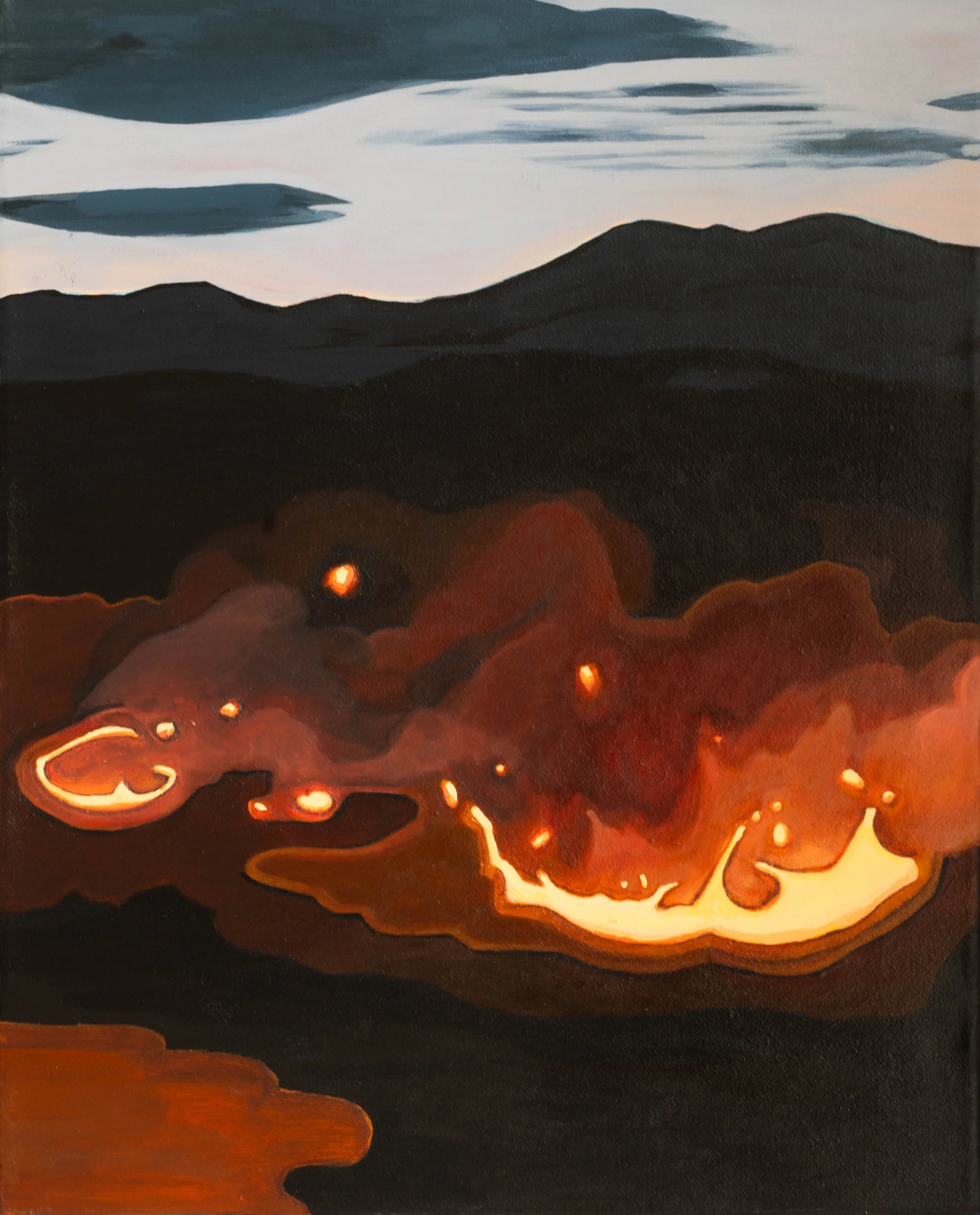
Slow Sun
The term Slow Sun does not refer to a specific motif, but rather to an atmosphere of prolonged duration—a condition in which light, warmth, and traces of presence persist even after their original function or meaning begins to fade.
The Slow Sun cycle continues the trajectory of the earlier Liminal Fields, while gradually shifting its focus from spaces of transition toward an atmosphere of lingering light and retained warmth. Although the previous works were grounded in a sense of liminality and unstable boundaries, those spaces never pointed toward dystopia or total disintegration, but rather toward a condition of suspended life and enduring warmth. The title itself evokes the feeling of an extended day and a time that has lost its familiar rhythm, as though light remains longer than it should.
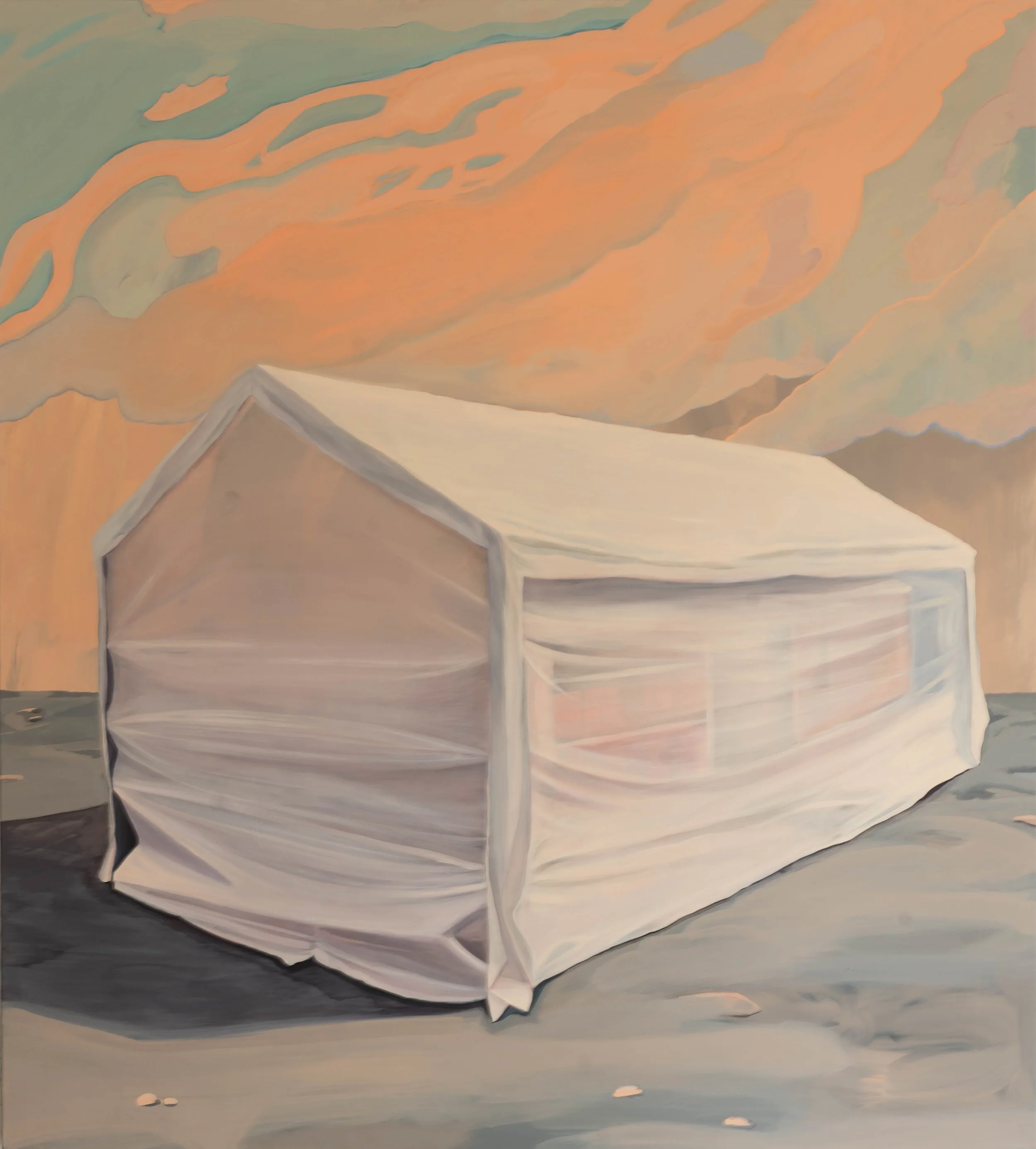
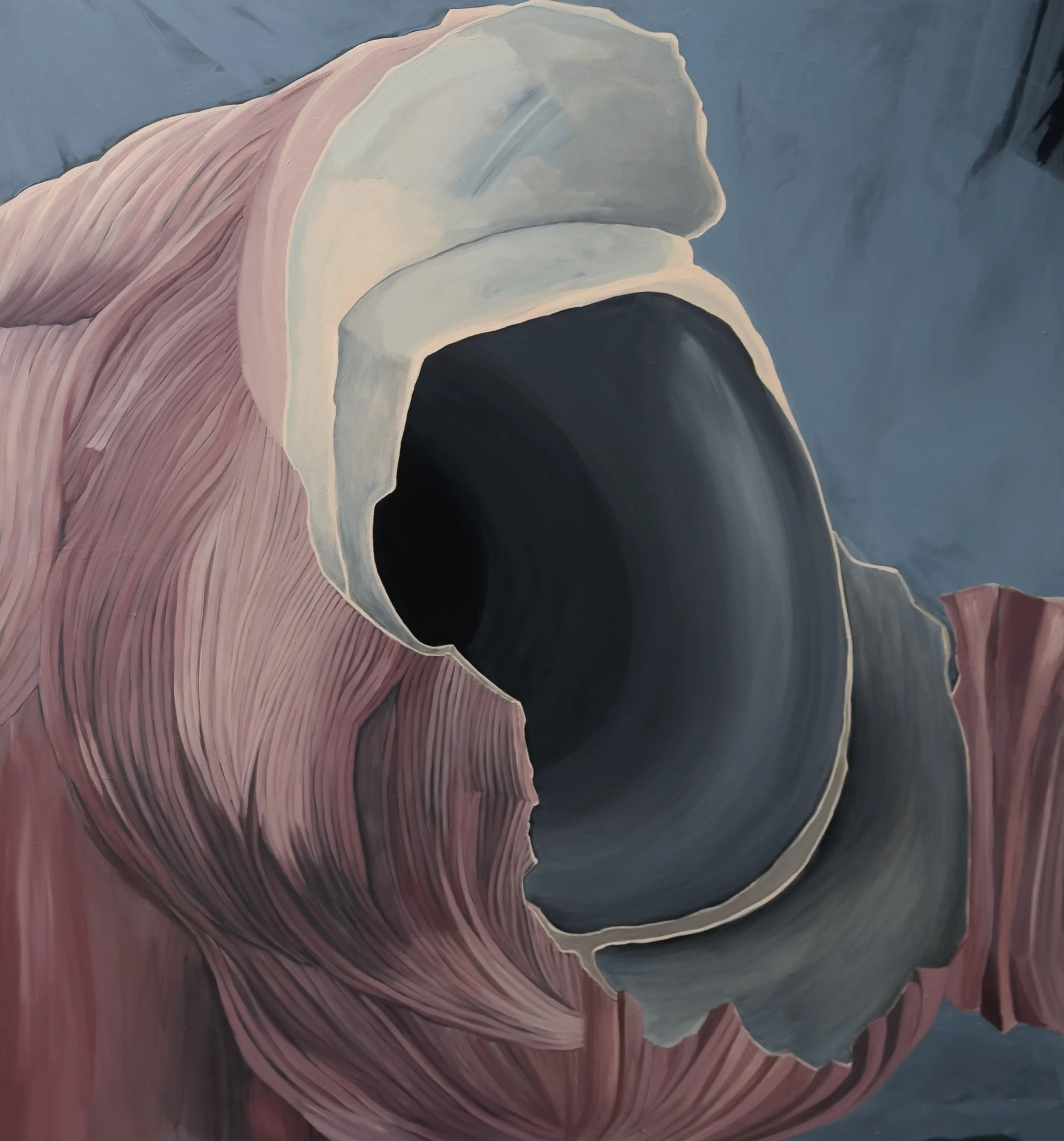
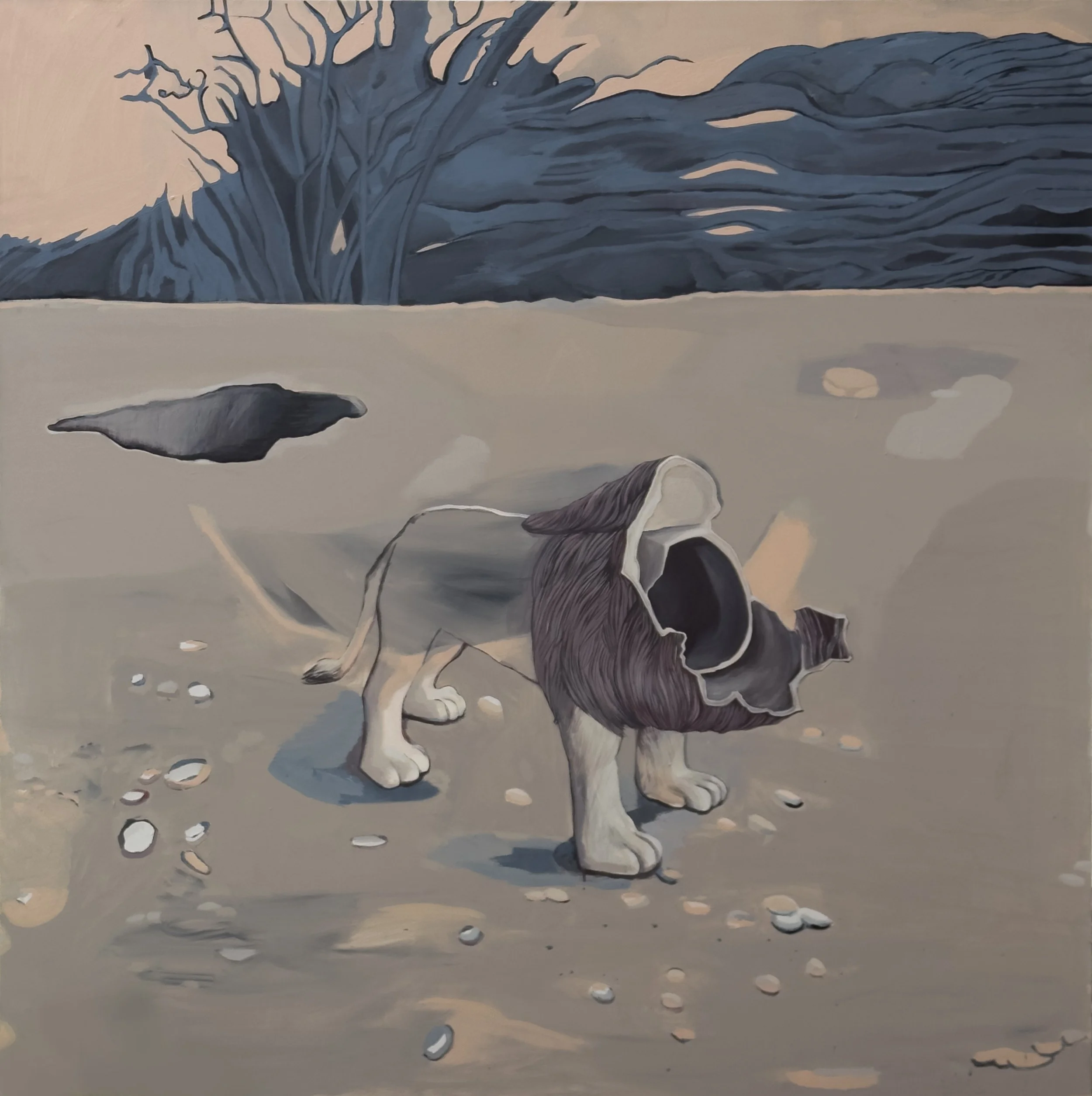
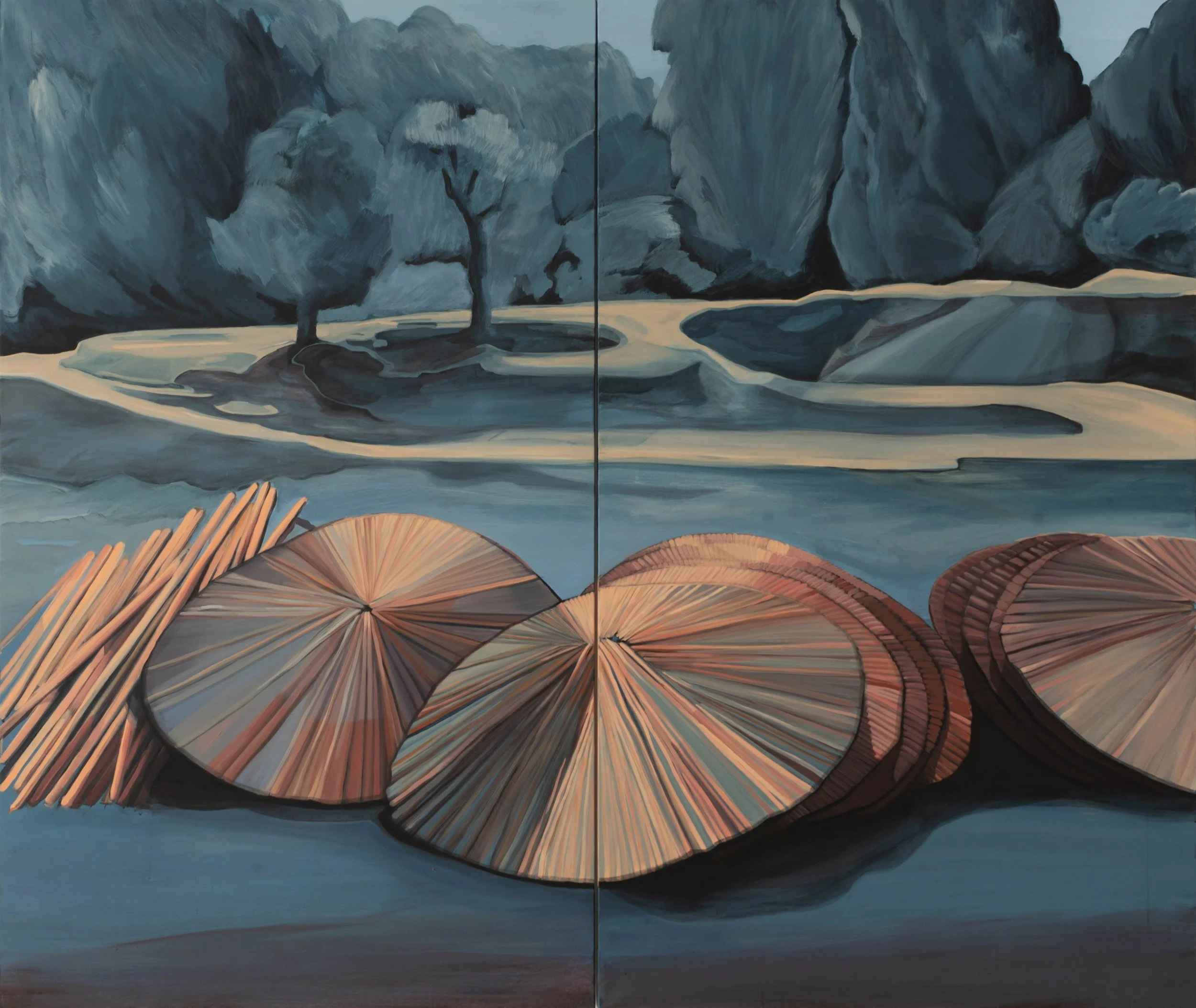
Landscapes, shelters, and fragments of space appear as places suspended between memory, dream, and inner experience. Tents, parasols, palm trees, and figures such as the Headless emerge as familiar forms that become displaced and unstable, as if they had remained exposed to time, light, or absence for too long. Palm trees undergo transformation and change—both biological and formal—under the influence of the slow sun, existing somewhere between growth, exhaustion, and fragmentation. In some works, warmth no longer appears merely as an external atmosphere, but as an internal condition of the space itself.
Dark ultramarines, muted blues, and restrained warm tones construct an atmosphere of an extended day and a light that is gradually losing its stability. Within this space, time seems stretched, the air remains still, and the landscape becomes a territory between external appearance and inner experience. The paintings therefore do not depict a specific event or narrative, but an atmosphere: a moment in which a place still retains warmth, a gaze, and the trace of someone's presence.